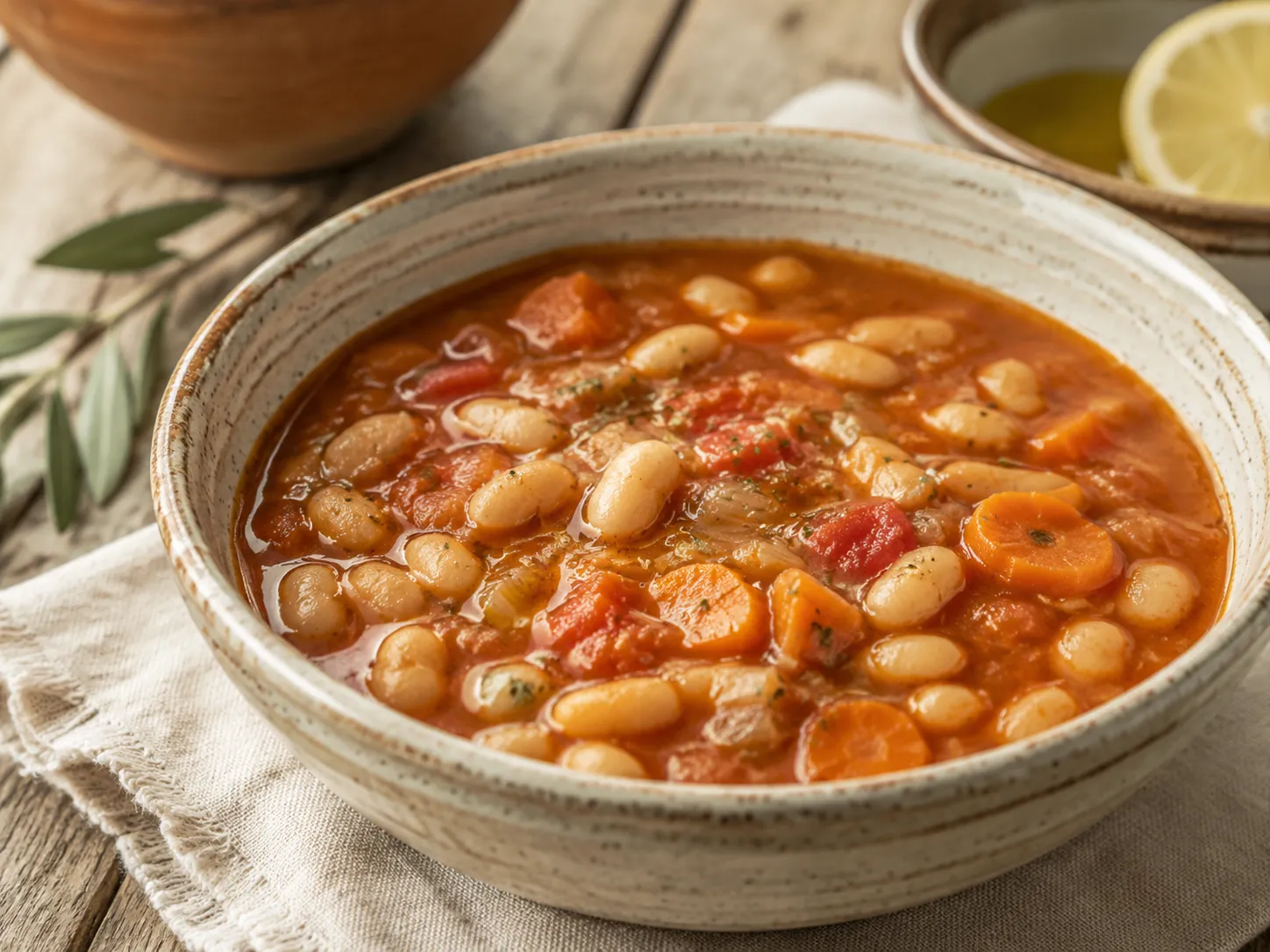
Fasolada - Greek White Bean Soup
A traditional Greek white bean soup that's hearty, nutritious, and perfect for cold days. This classic dish from Greek cuisine features tender white beans simmered with vegetables in a rich tomato broth, finished with olive oil and lemon.
About Fasolada
Fasolada (φασολάδα) is often called the "national dish of Greece" and represents the heart of Greek home cooking. This humble yet incredibly satisfying white bean soup has been nourishing Greek families for generations, especially during the fasting periods of the Orthodox calendar when meat is traditionally avoided.
Historical Origins
The origins of Fasolada can be traced back to ancient Greece, where beans were considered a sacred food and were often used in religious ceremonies. The dish evolved over centuries, incorporating influences from the Byzantine Empire and the Ottoman period. The addition of tomatoes, which arrived in Greece in the 18th century, transformed the simple bean soup into the rich, flavorful dish we know today.
Cultural Significance
In Greek culture, Fasolada represents more than just sustenance—it embodies the philosophy of "meraki" (μεράκι), the Greek concept of putting love and soul into everything you do. This soup is traditionally prepared with patience and care, allowing the beans to slowly absorb the flavors of the vegetables and herbs. It's a dish that brings families together around the table, especially during the cold winter months.
Why This Dish Matters
Fasolada is a perfect example of how simple ingredients can create extraordinary flavors when prepared with traditional techniques. The slow cooking process allows the beans to develop a creamy texture while the vegetables create a rich, complex broth. This dish demonstrates the Greek approach to cooking: using fresh, seasonal ingredients and taking the time to let flavors develop naturally.
Ingredients
For the Beans
- 300-400g white beans (dried or canned)
- Water for soaking and cooking
For the Soup
- 1-2 onions, diced
- 2 carrots, sliced
- 2 celery stalks (or parsley root if celery not available)
- 2-3 tbsp olive oil (be generous, in Greece it's often ½ cup)
- 400g chopped tomatoes (canned or fresh grated)
- 1-2 tbsp tomato paste
- Salt and pepper to taste
- Oregano or thyme (optional bay leaf)
- Lemon juice or vinegar for seasoning
Instructions
Step 1: Prepare the Beans
- If using dried beans: soak overnight in plenty of water
- The next day, drain and pre-cook for 30-40 minutes in fresh water until almost tender
- If using canned: just rinse and add directly to the pot
Step 2: Sauté the Vegetables
- Heat olive oil in a large pot
- Sauté onion, carrots, and celery until soft
- Add tomato paste and briefly roast with the vegetables
Step 3: Add Tomatoes & Beans
- Add chopped tomatoes and beans (with cooking water if using dried)
- Fill with water until everything is covered
- Season with salt, pepper, oregano/thyme and optionally 1 bay leaf
Step 4: Simmer & Finish
- Simmer gently for 40-60 minutes (20-25 minutes for canned beans)
- The soup should be thick but not mushy
- Finish with plenty of olive oil
- Season with lemon juice or a splash of vinegar before serving
Tips
- Soaking time: 10-12 hours is ideal, sometimes 12-24 hours helps
- Cooking time: Gigantes beans need 90 minutes to 2 hours, sometimes even longer
- Salt timing: Always cook beans soft first, then add salt or acidic ingredients (tomatoes, lemon juice, vinegar)
- Old beans: If they don't soften, it might be due to very old beans. Try adding ½ tsp baking soda to the cooking water
- Consistency: The soup should be thick but not pureed - the beans should still be whole
Variations
- Add protein: Top with crumbled feta cheese
- Extra vegetables: Add bell peppers or artichoke hearts
- Herb variations: Use different combinations of oregano, thyme, and bay leaves
- Spicy version: Add a pinch of red pepper flakes